
Introduction
The incorporation of recycled polyols into flexible polyurethane foams represents a promising approach to reducing the consumption of virgin raw materials and moving towards more circular production models. However, the chemical variability of these materials can affect formulation compatibility, foam stability, and final properties.
In this study, four silicone surfactants (E0329_1, E0329_2, E0329_3 and E0329_4) designed for flexible slabstock formulations containing recycled polyol were evaluated. Compatibility, stability, cell regulation, density, hardness (CLD), airflow, and compression set (CS) were analyzed.
Objective
To develop and select a suitable silicone surfactant for flexible foam formulations based on recycled polyol, ensuring a balance between stability, cell regulation, air permeability, and mechanical properties.
Methodology
Stability
Visual compatibility tests were carried out using a PU formulation with each surfactant (1 pphp), evaluating the initial state, after 24 hours at room temperature, and after accelerated aging for 7 days at 50 °C.
| Component | Pphp |
|---|---|
| Polyol OH=48 | 75 |
| Recycled polyol | 25 |
| H2O | 5 |
| TEDA | 0.15 |
| DMEE | 0.05 |
Subsequently, free-rise foaming tests were carried out on slabstock formulations containing 25% and 50% recycled polyol. Foam stability, cell structure, hardness (CLD), density, airflow, and compression set were evaluated.
Results and Discussion
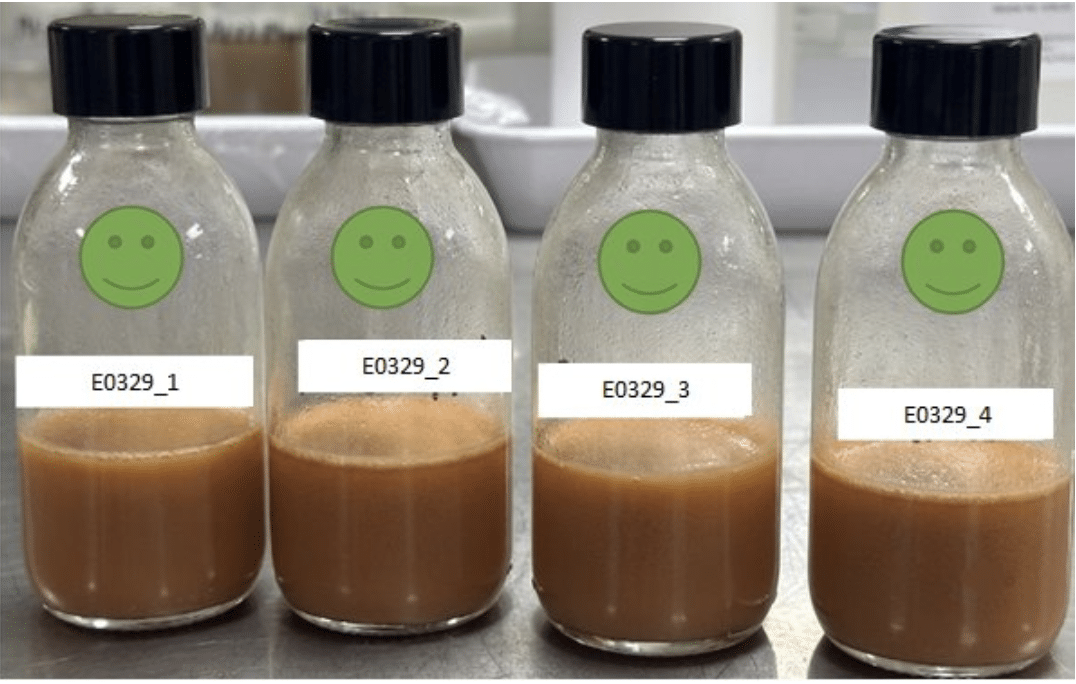
Figure 1: Initial test
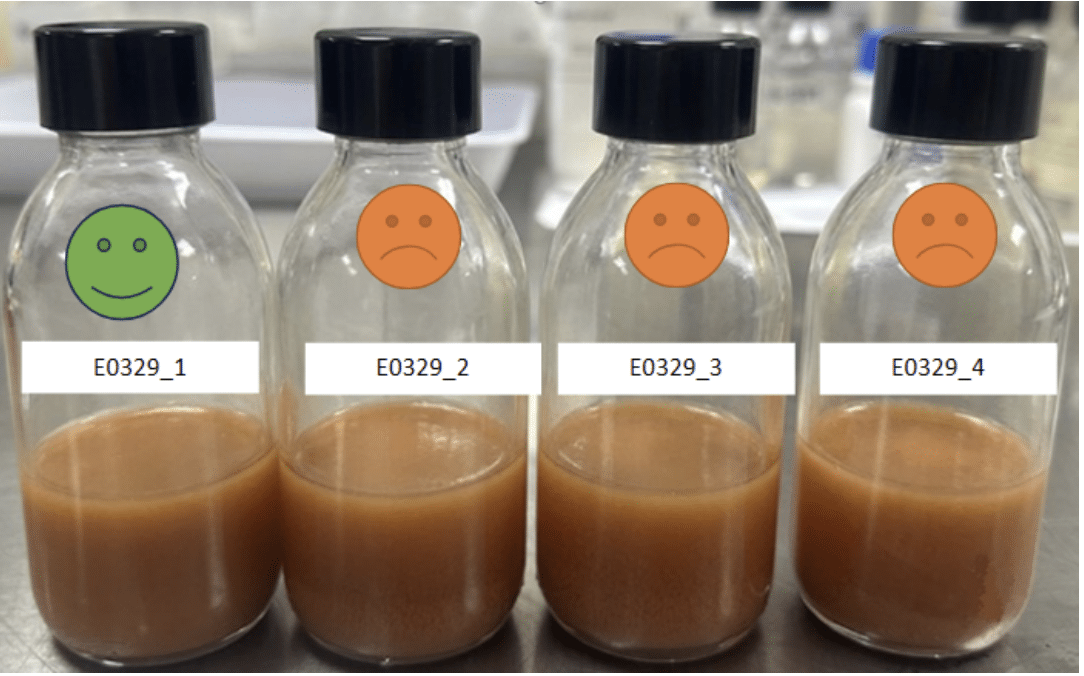
Figure 2: 24 h at room temperature
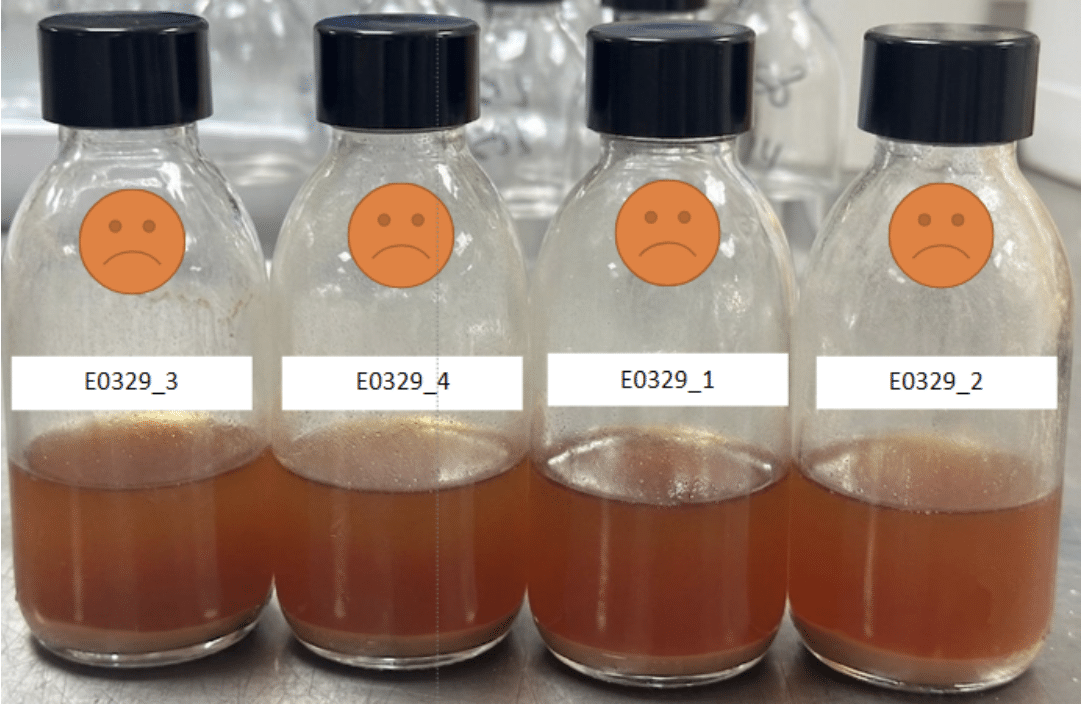
Figure 3: Aging test at 50 °C
The compatibility tests showed good initial stability for all surfactants. After accelerated aging, most showed some phase separation, indicating that severe conditions can affect the stability of the formulated system.
Foams
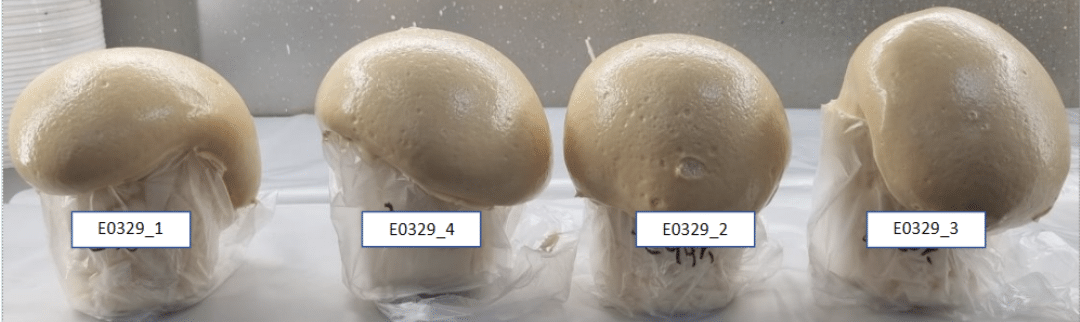
Figure 4: Foams with 25% recycled polyol
In formulations containing 25% recycled polyol, all candidates provided adequate stabilization. Clear differences were observed in air permeability and cell regulation. E0329_4 showed the highest breathability and a more open structure, whereas E0329_2 exhibited a more closed structure.
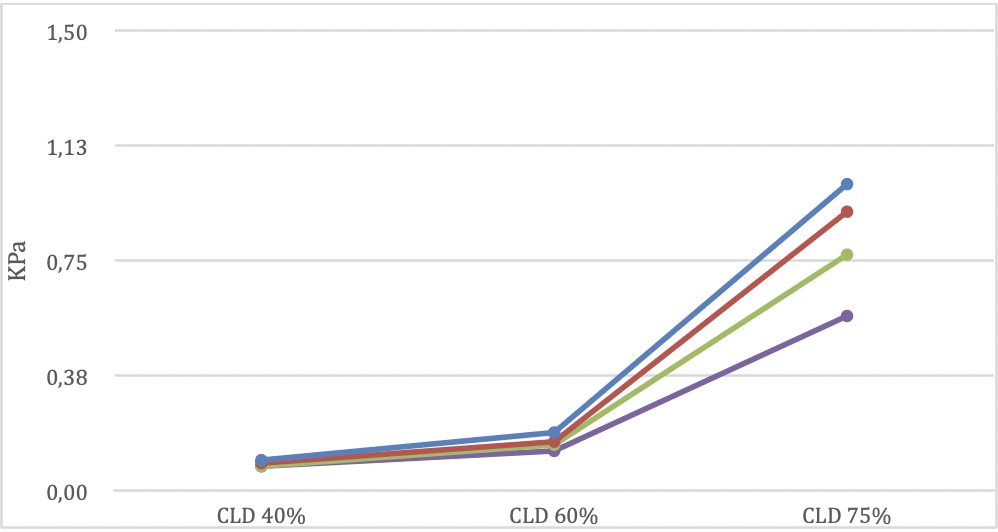
Figure 5: CLD values in formulation with 50% recycled polyol
With 50% recycled polyol, no collapses were observed, confirming the stabilizing capacity of all candidates. The CLD results indicated different levels of firmness among the surfactants. E0329_1 generated the highest values, while E0329_4 produced softer foams. E0329_3 stood out for its finer and more homogeneous cell structure.
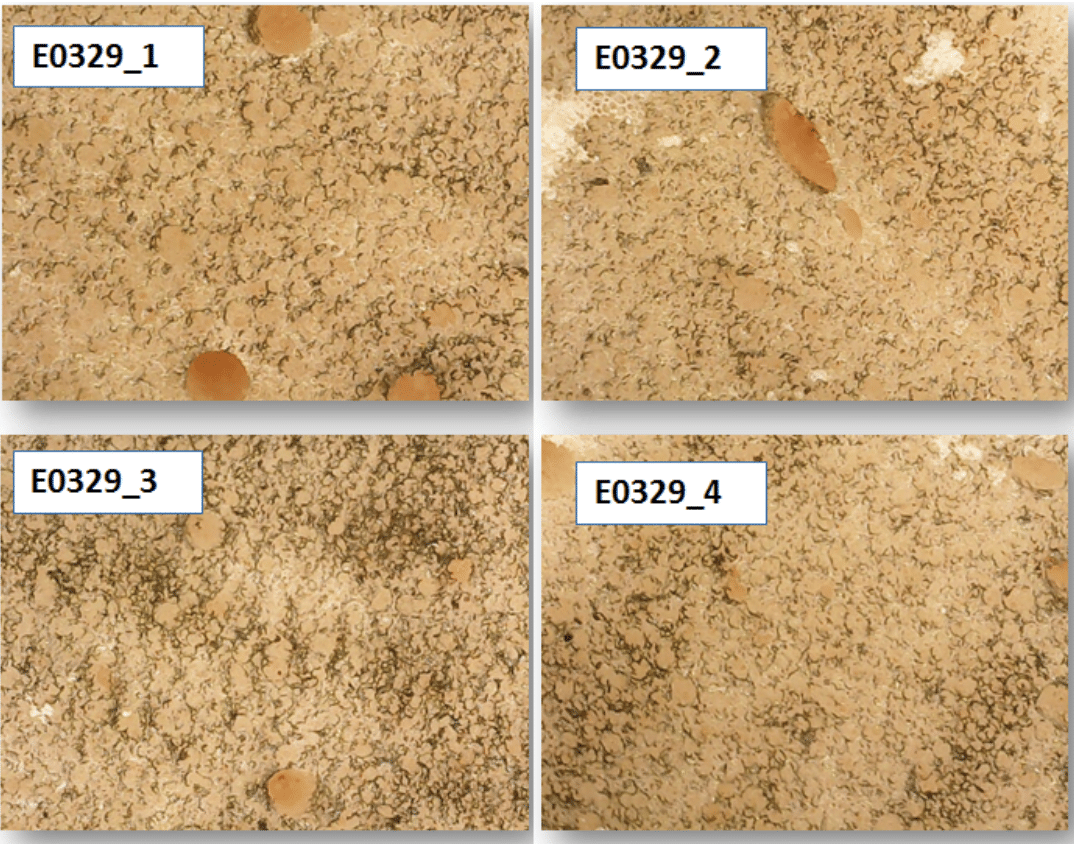
Figure 6: Internal cell structure, 50% recycled polyol
Likewise, E0329_2, E0329_3 and E0329_4 showed similar behavior in terms of airflow and open cells. Compression set results were acceptable for all formulations, with E0329_1 and E0329_3 standing out for their lower values, indicating better recovery after compression.

Conclusions
- All evaluated surfactants showed adequate stabilization capacity in formulations containing recycled polyol.
- Compatibility was satisfactory under standard conditions, although accelerated aging revealed some tendency towards phase separation.
- E0329_4 stood out for its high breathability and open-cell character.
- E0329_3 showed the finest and most homogeneous cell structure in formulations containing 50% recycled polyol.
- The results confirm that surfactant selection is a key factor in optimizing the performance of sustainable flexible foams based on recycled raw materials.
